
For decades, relational databases have been the predominant solution for storing and managing interconnected information. However, at the end of their lifecycle, preserving both their data and functionality is often a challenge: traditional archiving methods store the information but do not guarantee future access or interpretability.
The Norwegian technological company Piql, together with the research group High Performance Computing of the University of Málaga (UMA), the Norwegian Computing Center (NRS) and Tedial, the leading independent MAM technology solutions specialist, have successfully completed a European project funded by the Eurostars-3 programme called iDA (Immortal Database Access).
The iDA project, launched in late 2022, aimed to develop technologies to solve the problem of long-term preservation and accessibility of relational databases, ensuring that their data and functionality remain usable in the future.
iDA tackled this challenge by providing a comprehensive preservation framework, combining physical and digital technologies to ensure archived data remains accessible and understandable, even in the face of technological obsolescence or the loss of knowledge about how the original system worked.
Technological innovation
The iDA project is built on three key components:
- SIARD (Software Independent Archiving of Relational Databases): an open format that encapsulates both the structure and content of the database, ensuring a detailed and self-contained representation of the original system.
- DBSpec: a domain-specific language to specify and execute preservation steps, documenting use cases and automating the generation of SIARD and ROAE files.
- ROAE (Read-Only Access Engine): a read-only access engine that allows querying preserved data according to defined use cases, even when the original system is no longer available.
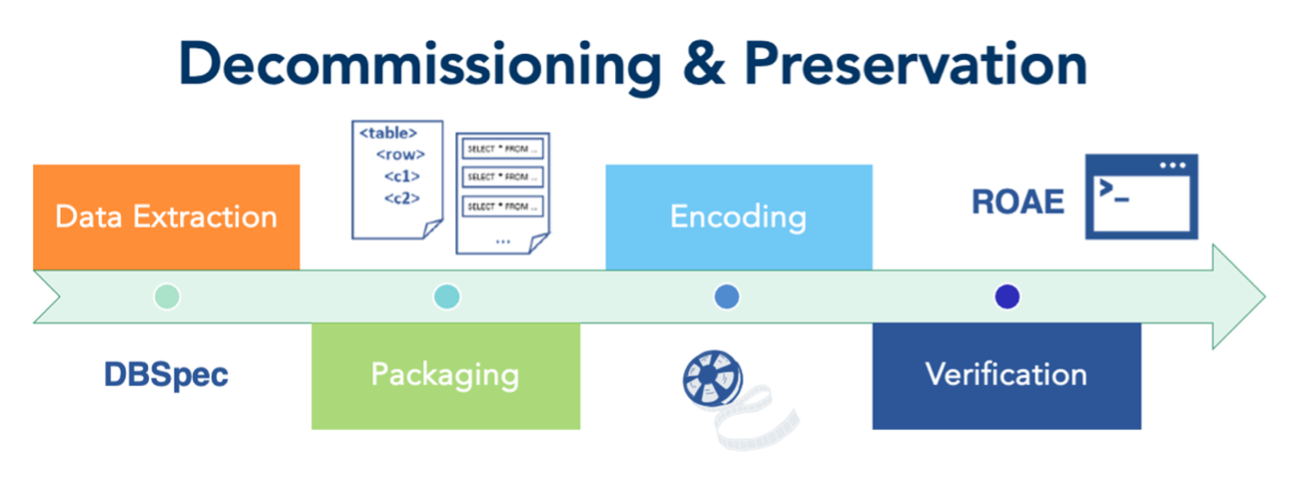
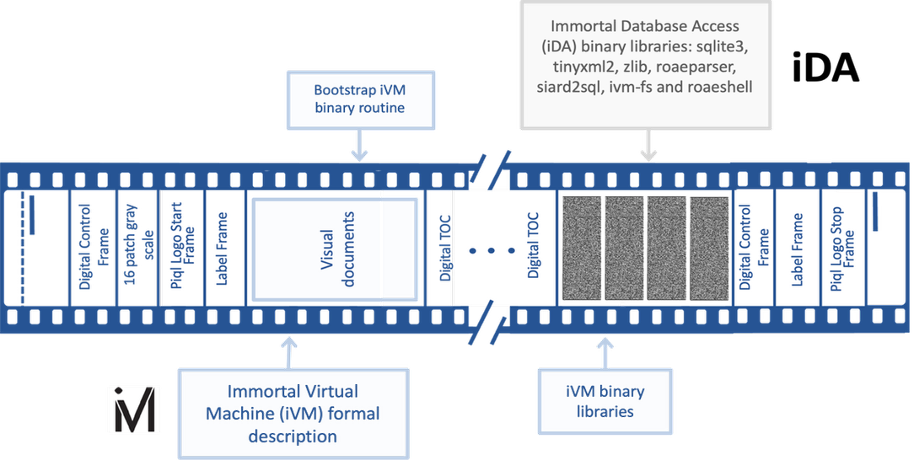
The project builds upon the Immortal Virtual Machine (iVM), a platform previously developed within a Eurostars-2 project, designed to ensure software executability over time, regardless of technological evolution. Physically, data is stored on piqlFilm, a highly durable film medium, ensuring preservation for centuries.
Use cases and accessibility
iDA preserves critical information across multiple sectors: academic and health records, cultural heritage, research results, and business and accounting data. Access to the preserved data is flexible and includes:
- Text-based menu interface, simple and low-resource, ideal for archivists.
- Command-line interface (CLI), enabling SQL queries or ROAE use cases for maximum flexibility and automation.
- ROAE Shell, an interactive application combining menus and CLI for accessing SIARD-preserved data, executable both on the iVM and current systems.
Value and sustainability
The iDA preservation process ensures not only the physical integrity of the data but also its practical accessibility over time, maintaining the original context and preventing technological obsolescence. SIARD and ROAE files, along with the necessary software, are stored in piqlBox and deposited in conservation facilities like the Arctic World Archive, where environmental conditions guarantee maximum longevity.
Conclusions
With the completion of the iDA project, the long-term preservation and practical accessibility of critical relational databases is now secured. The project demonstrates how advanced digital preservation technologies—combining SIARD, DBSpec, ROAE, iVM, and piqlFilm—can maintain both data integrity and usability across decades.
This achievement also underscores Tedial’s bold commitment to research and innovation, which has been instrumental in developing pioneering solutions that tackle complex challenges in digital preservation. By ensuring that today’s essential information remains interpretable and usable for future generations, iDA sets a new standard for secure, efficient, and sustainable data archiving.
Tedial’s commitment to research
As a leading independent provider of MAM technology solutions, Tedial has made a strong commitment to research and innovation, actively driving the development of new solutions for complex data management challenges. In the iDA project, Tedial’s expertise in media and data management was pivotal in advancing cutting-edge methods for preserving relational databases while ensuring future access to critical functionality and context. This proactive approach underscores Tedial’s role as a key innovator and a driving force in European digital preservation initiatives.
How Eurostars works
Eurostars provides funding to international R&D projects. Projects must be led by an SME or startup from a Eurostars country or region, and the project consortium must also include at least one other independent organisation from another Eurostars country. Partners in the consortium can include any type of organisation.
Eurostars funding comes from National Funding Bodies, which are ministries or funding agencies in each Eurostars country or region, and from the European Commission. National Funding Bodies determine how much funding is available, the funding rate per type of company, and which activities are eligible based on national rules.